From Static Data to Decision Intelligence
Media firms are shifting from static dashboards to decision intelligence—connecting siloed data into a real-time decision layer. With semantic intelligence, they unlock content value, optimize programming, and drive faster monetization and audience engagement.

By Ivan Verbesselt, Chief Strategy & Marketing Officer, Mediagenix
The media industry has spent years building dashboards.
Now we are building decision intelligence.
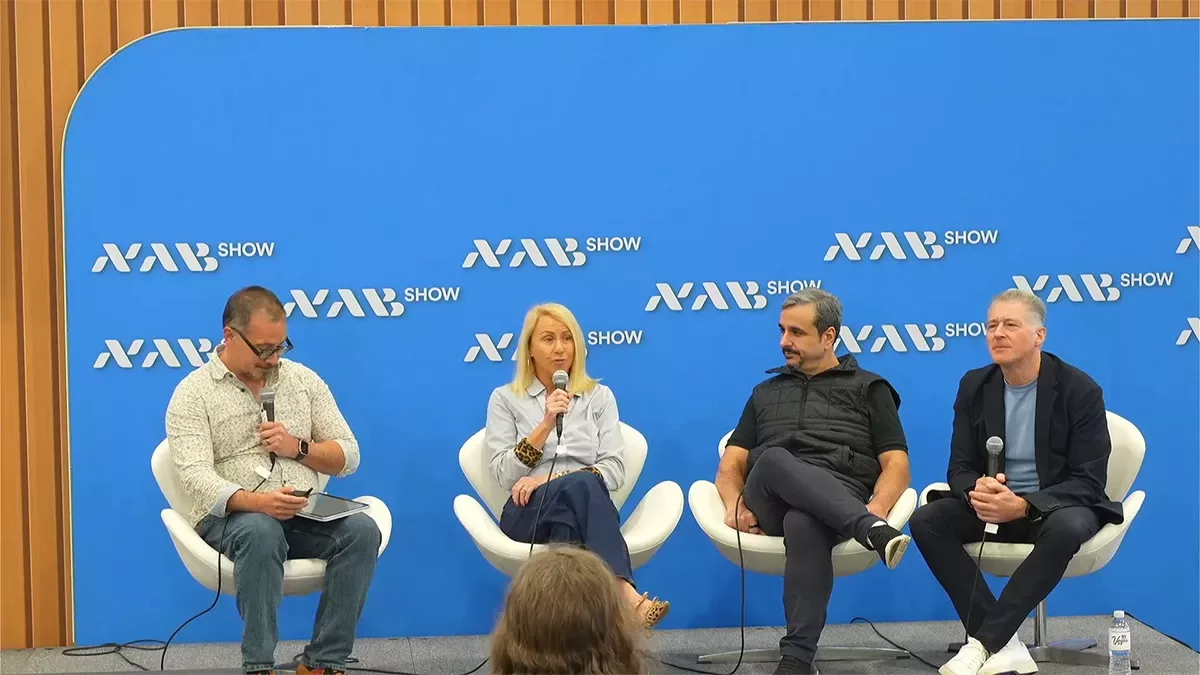
That shift was at the center of the DPP’s “Making Data Pay” panel at NAB 2026, where leaders from Globo, AMC Networks, and Mediagenix discussed how media organizations are evolving from simply collecting data to operationalizing it across programming, monetization, audience engagement, and strategy.
The conversation revealed a broader transformation happening across the industry: data is no longer just supporting operations. It is becoming the decision layer that drives a real-time enterprise.
Video credit: NAB Show and The DPP
The Problem Isn’t Data. It’s Visibility.
The challenge is not a lack of data. Most media companies already have enormous amounts of audience analytics, metadata, rights information, scheduling data, engagement metrics, and operational reporting.
What matters is transparency and how you access data across those environments to ensure a single source of truth. Now that is a technical problem and one that we at Mediagenix have solved.
The industry is increasingly recognizing that silos themselves are not inherently bad. Different systems and teams naturally serve different operational functions. Rights data may live in one system. Title information may live in another. Audience analytics may come from multiple platforms.
The challenge is creating visibility and intelligence across those systems so organizations can access trusted information dynamically, connect workflows, and operationalize decision-making across the business.
As AMC Networks’ Robyn Goldman explained during the panel, traditional reporting approaches create major operational bottlenecks. Teams generate massive reports to answer a single question, and when another question emerges, they often need to request yet another report from the technology team. This is a process that can take weeks or even months.
That model is not sustainable in an environment where content decisions, programming strategies, and monetization opportunities need to happen continuously and in near real time.
Instead, media organizations are increasingly focused on creating immediate access to trusted data that can answer business questions dynamically, enabling a real-time enterprise operation.
Building a Decision Layer for Media
This represents a major shift in how the industry thinks about data architecture.
Importantly, creating intelligence across the organization does not require consolidating every workflow or every system into a single monolithic platform or data lake.
The technical location of the data matters less than the ability to create one decision layer across the organization.
That decision layer allows organizations to connect trusted sources of information while preserving operational flexibility. Rights systems remain systems of record for rights. Title management remains the trusted source for titles and metadata. Audience systems continue generating viewer insights.
The difference is that organizations can now interrogate those environments collectively to answer business questions faster and more intelligently.
That shift is especially important in title management and monetization.
Why Semantic Intelligence Matters
Today, many media companies still struggle with a surprisingly fundamental challenge: understanding what content they actually have, what rights are attached to it, what audiences it resonates with, and where monetization opportunities exist.
The success of rapid monetization ultimately comes down to understanding what is actually in your catalog.
This is where Semantic Intelligence becomes increasingly critical.
Traditional metadata systems allow users to search for exact titles or structured database fields. Semantic Intelligence goes further by helping organizations understand relationships between content, audience preferences, editorial intent, and business value.
Instead of simply locating a title in a database, media companies can begin identifying semantically similar content, automatically building collections, surfacing underutilized catalog assets, and connecting programming decisions directly to audience behavior and monetization opportunities.
Turning Catalogs into Monetization Engines
This creates entirely new operational possibilities.
Content that may have sat dormant for years can suddenly become monetizable because teams can finally discover and contextualize it effectively. Licensing teams can identify related content packages faster. Scheduling teams can create smarter content pools. Editorial teams can curate channels and streaming experiences more dynamically.
At Mediagenix, we consider this “human-in-the-loop” approach not just a vetting process but an amplifier, where editorial goals, audience insights, rights availability, and semantic recommendations work together to create smarter programming and monetization strategies.
The same intelligence used to improve recommendations and personalization externally can also help internal teams better understand catalog value, optimize scheduling, and accelerate monetization opportunities internally.
Globo reinforced this idea during the discussion.
Igor Macaubas, Director of Product & Engineering for Digital Products at Globo, emphasized that media companies must simultaneously understand both their content libraries and their audiences. Those insights directly influence acquisition strategies, programming investments, recommendations, and viewer engagement decisions.
The Foundation of Decision Intelligence for Media
While AI was an important part of the conversation, the panel also delivered an important reality check: AI is only as effective as the quality and contextual understanding of the underlying data.
The future of media operations will not be driven by AI alone. It will be driven by how effectively organizations connect semantic understanding, audience intelligence, operational workflows, and trusted data sources into continuous decision-making systems.
That is the emerging foundation of Decision Intelligence for Media and it is fundamental to building a real-time media enterprise operation.
Insights
Get inspired
08 Oct. 2026
Mediagenix Context-Aware Scheduling Helps Media Companies Anticipate What Will Compete for Audience Attention


09 Sep. 2026
Mediagenix Curation Unlocks Greater Catalog Value Through Personalized Audience Experiences

08 Sep. 2026
Mediagenix Personalization Curates Sports Content Around Individual Viewer Interests.