Viaplay
How Mediagenix On-Demand flexible data model and strong APIs helped Viaplay expand their VOD services and enter new territories, increasing efficiencies and without incurring spiralling operations costs.
Viaplay
About the customer
Viaplay is a streaming services owned by Viaplay Group. The company operates the namesake video streaming services Viaplay and Viafree, advertising-funded TV and radio channels, the V pay-TV channels, as well as the studio production company Viaplay Studios. Viaplay Group was founded in 2018 as a spinoff from MTG.
Improving Workflows
In 2015, when Viaplay decided to double down on VOD content and streamline their subscription video streaming service, their operational infrastructure was not optimized for non-linear content delivery. Lacking a centralized content management system, Viaplay’s product team needed a solution that would allow for the automation of some publication processes and increase the amount of content going through their linear and non-linear channels.
“After meeting Mediagenix, we got a good sense of what they could do for us. They were willing to take the time to understand Viaplay’s use cases, and they were also clear about the scope of the services they can offer us.
This is something we valued from the beginning: there were never any false promises made.”
Urban Lofbom
Viaplay’s Platform and Product Manager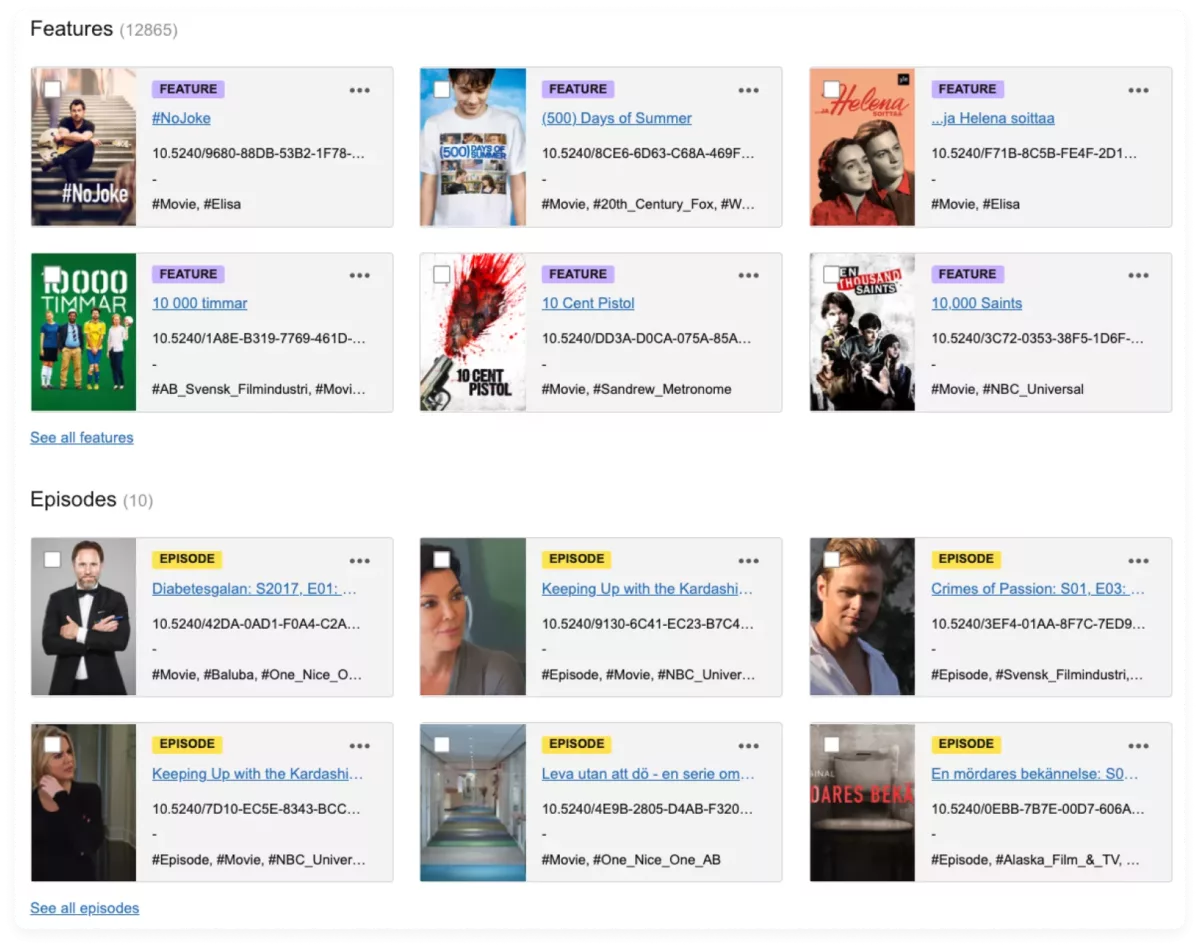
Implementing the EIDR Matching System
After dialogue with the Mediagenix team, Viaplay decided to implement EIDR IDs to consolidate their content and use Mediagenix On-Demand for their central content and metadata repository. “We decided not to allow any title to enter into the service unless it was EIDR matched,” Urban explained. This ultimately allowed the Viaplay teams to have a single source of truth, resulting in more efficient workflows and greater control.
EIDR, or the Entertainment Identifier Registry, is a global unique identifier system primarily for commercial audiovisual content. Each object in the Registry is assigned a unique, universal, persistent identifier, or EIDR ID. This ID can later be used to identify content assets and metadata across various content management systems, instantly improving internal asset tracking.
Viaplay implemented the EIDR IDs using Mediagenix On-Demand’s API and external ID fields. This created a centralized and standardized data architecture, which later allowed Viaplay to work with both linear and non-linear scheduling systems without duplicating titles or metadata.
While this solution worked well for Viaplay, there are other ways teams working with Mediagenix On-Demand can manage their content IDs. As each use case is unique, Mediagenix works with customers closely to find the data architecture that fits best their specific needs.
“Since everything is web-based in Mediagenix On-Demand, after we made the decision to work remotely in March, it all worked out beautifully.”
Urban Lofbom
Viaplay’s Platform and Product Manager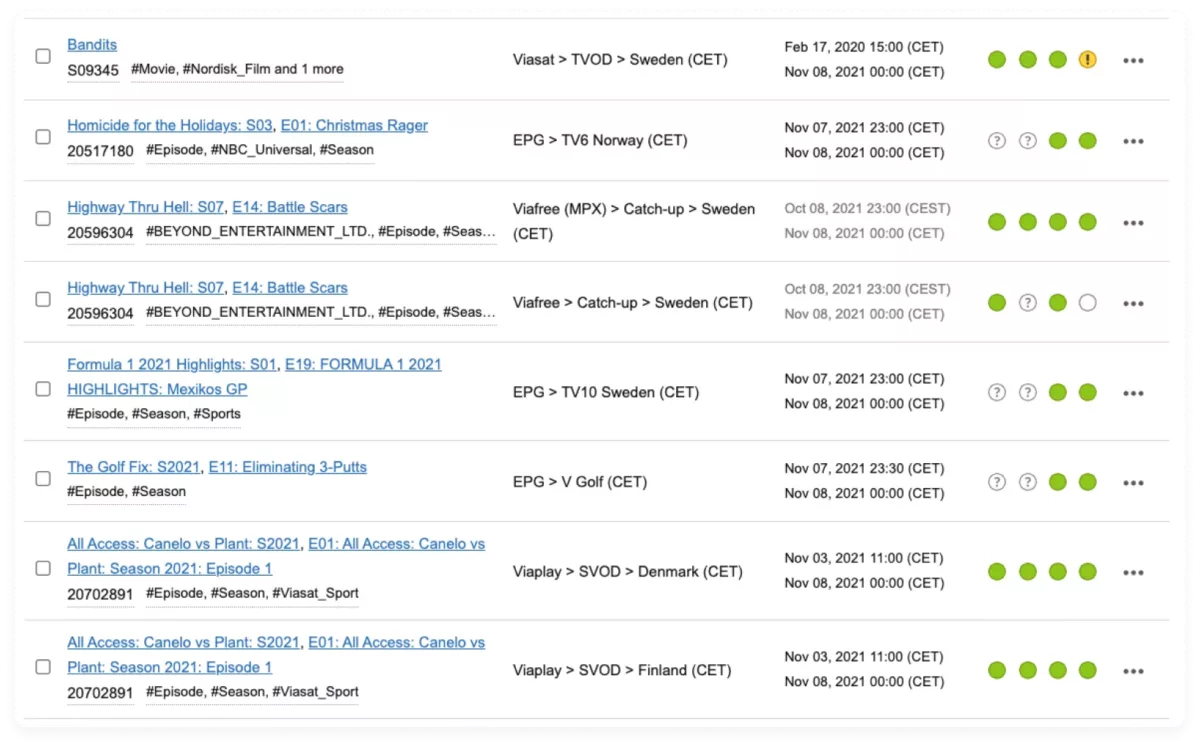
Team Collaboration in Mediagenix On-Demand
Thanks to Mediagenix On-Demand’s robust and well-documented APIs, Viaplay integrated their existing tools easily, greatly enhancing their users experience. Because their systems are able to communicate through Mediagenix On-Demand efficiently, Viaplay is now able to generate entries in the Catalogue of the platform automatically, based on the rights recorded in their linear scheduling system. After the content entries have been generated, different teams take over and work on adding missing metadata and assets: defining genres; adding synopsis, images, subtitles, etc. This end to end workflow with integrated components allows Viaplay’s users to focus their time on being creative in the scheduling process, rather than getting tied down with slow and inefficient processes.
Viaplay teams also use Mediagenix On-Demand for checking scheduling statuses, validating rights and metadata, tracking workflows, and showcasing the progress of different departments internally through the Reporter Module.
From Mediagenix On-Demand’s Work page teams, suppliers, and vendors from all over the world can work together sharing schedules, tasks and workflows in real-time. Through the list of pending titles, teams can track the status of content that’s being processed and see if there are any problems, missing material or incomplete tasks. Teams can also track who’s working on what title at the moment. All of this information is readily accessible from the convenience of any browser, which means teams can work from any place and from any device with an internet connection.
“We started out with only the Viaplay team using Mediagenix On-Demand but later we added teams working on our linear channels, Viafree and also external platforms. We are now close to 100 users and we are using it for all sorts of things.
With COVID-19, working from home was no problem at all. Since everything is web-based with Mediagenix On-Demand, after we made the decision to work remotely in March, it all worked out beautifully.”
Urban Lofbom
Viaplay’s Platform and Product Manager
Expanding Into New Platforms And Territories
Because Viaplay is sending SVOD content or catch up libraries to almost all major players in the Nordics, it was important for their content management teams to find a VOD scheduling solution that is flexible in its data architecture and allows for adding and configuring new platforms easily. Be it growing the number of platforms or expanding to new territories, Viaplay needed a solution that allows for changing metadata validation requirements flexibly and fast, reducing costs and eliminating inefficiencies.
“Again and again working with Mediagenix On-Demand has proven to be straightforward” Urban Löfbom, Platform and Product Manager
“In terms of expansion, we can quickly set up what we need in new territories in Mediagenix On-Demand. In the Baltics, we will probably have 3 different languages per region. Setting up the metadata validation for that will be quite easy with the configurable mapping layer,” Urban explained to us.
The configurable mapping layer is part of Mediagenix On-Demand’s Superset metadata exporter, which allows the delivery of content and technical metadata in formats different from the ones offered by Mediagenix On-Demand out-of-the-box (see our list of integrations here). As new validation requirements are configured in the mapping layer, the payload updates automatically, and new publications are made based on the most recent configuration.
“Again and again working with Mediagenix On-Demand has proven to be straightforward,” Urban added. “This is not that common in this industry. Usually, you bang your head against walls. But of course, Mediagenix On-Demand does not offer a one size fits all solution. There have been times when we had to build workarounds, but we never hit a firm roadblock. With Mediagenix On-Demand, we always help each other out to move forward.” Urban Löfbom, Platform and Product Manager
Inspirations
Customer stories
25 Nov. 2025
Anuvu
Where SaaS meets first class — How Mediagenix On-Demand’s SaaS solution has provided flexibility and transparency to Anuvu’s globally distributed team of schedulers, analysts, editorial metadata coordinators, who have produced over 300,000 schedule entries in that time.

25 Nov. 2025
Viaplay
How Mediagenix On-Demand flexible data model and strong APIs helped Viaplay expand their VOD services and enter new territories, increasing efficiencies and without incurring spiralling operations costs.
08 Sep. 2025
ITV
How Mediagenix supports ITV on their digital transformation journey with on-demand content management tools and the new Linear module, a strategic planning tool developed hand-in-hand with ITV’s linear channel management teams.

Mediagenix On-Demand
Mediagenix On-Demand lets you manage the editorial and operational sides of your video distribution on on-demand platforms, from a beautifully intuitive interface.