Streaming Personalization: Why Context Beats the Algorithm

By Bart Lemaire, VP Content Value Management & Personalization
It’s Not the Engine. It’s the Context.
Fifteen minutes. That’s how long viewers aged 18–24 spend searching for something to watch, according to Gracenote’s 2026 State of Play* report. Across all ages, the average is 12 minutes. And half would consider cancelling a streaming service if they consistently can’t find something they want.
This is happening even though almost every service now has a recommendation engine. The problem isn’t the engine. It’s that most engines don’t have enough information about the content, the viewer, and the rights, availability, and scheduling behind each title to make the right match. In other words, the engine lacks context. To build context, you need personalization.
Context starts with richer metadata. Mediagenix Personalization enriches content metadata to give recommendation engines the full picture: what each title is about, who it’s likely to appeal to, and where, when, and to whom it can be offered. It connects the content, the viewer, and the business context in one place, and it’s applied long before someone opens a streaming app. It’s why IDC named Mediagenix one of just four IDC Innovators in Media and Entertainment for 2026, and why our work has earned Best of Show awards at NAB Show and IBC2026. But before we dive into our approach, it’s worth looking at how poor content discovery is affecting the state of streaming today.
It’s Like a Game of Hide-and-Seek
For years, streaming services competed by building bigger content libraries. They invested in original programming, acquired exclusive rights, and expanded their catalogs to give audiences more choice.
That strategy transformed entertainment. Today, whether someone wants a blockbuster film, niche documentary, international drama, or live sports, the content almost certainly exists.
It’s just not always easy to find. More than 51% of streaming viewers say the abundance of content and services is making it harder to find something to watch, according to the Gracenote report.
Great programming is hidden behind endless rows of recommendations, genre menus, trending lists, and “Because You Watched” carousels. The expectation is that if viewers keep scrolling long enough, they’ll eventually find something worth watching.
But that’s not why people open a streaming service. They want to be entertained, without having to search for it.
“Could what I want to watch be in this category? No. Maybe documentaries? No.” At some point the TV gets switched off, and eventually the subscription gets canceled.
It happens more often than you might think. According to the same report, 27.3% of viewers frequently try to watch something but don’t because they can’t find it, and 19% often abandon their searches altogether.
Every abandoned browsing session is a missed opportunity. Not because the platform lacked great content, but because it failed to connect the viewer with the right content at the right moment.
Content needs to find its audience from the start. Otherwise, viewers are left playing hide-and-seek.
How Mediagenix Builds Better Content Intelligence
Most recommendation engines are good at recognizing patterns. They know what someone watched yesterday, which genres they prefer, what they’ve finished, and what similar audiences enjoyed.
But that isn’t enough. A high-performance recommendation engine also needs a 360-degree view of the content itself, and that requires far more than a title, genre, or description. This is where Mediagenix Personalization is a game-changer.
Mediagenix Personalization starts by enriching content metadata to build a detailed semantic fingerprint of every title, capturing the themes, moods, topics, and relationships that traditional metadata misses. A program isn’t simply a drama or a comedy. It has characteristics that explain why someone might enjoy it and how it relates to other content.
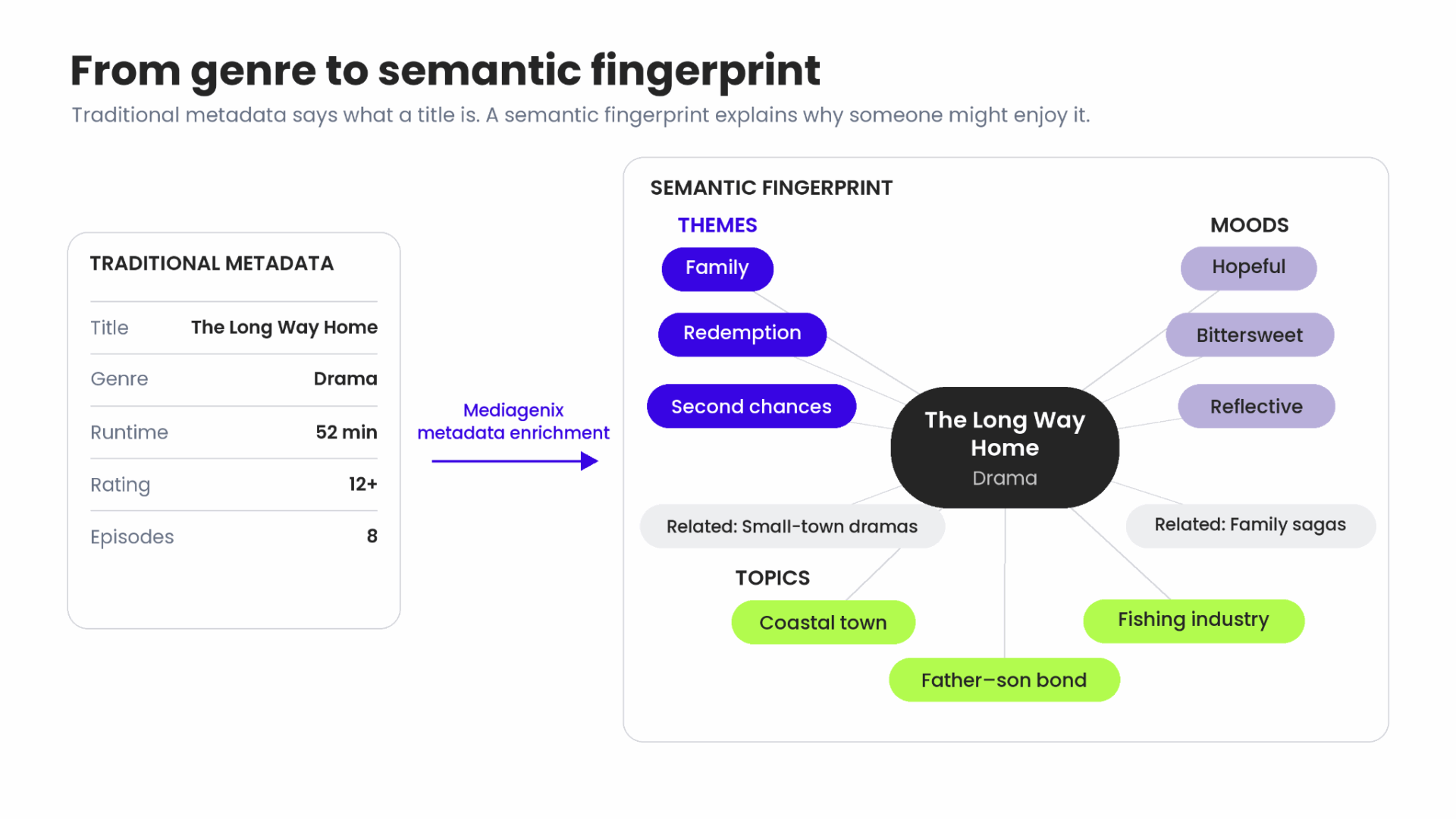
We call this Semantic Intelligence: understanding what a title is about, together with everything the business knows about where, when and to whom it can be offered. It’s the cornerstone of Mediagenix Personalization.
And Mediagenix Personalization works in two ways. It’s seamlessly integrated into the broader Mediagenix platform, but it can also work as a stand-alone solution, integrating with existing streaming platforms and using customer metadata, complemented by Mediagenix Semantic Enrichment. This allows media companies to improve content discovery and recommendations without replacing their existing systems.
The broader Mediagenix platform offers an additional advantage: with capabilities spanning content, rights, scheduling, and curation, we can progressively connect content and audience intelligence to more decisions across the media lifecycle.
What Do You Feel Like Watching?
Of course, understanding the content is only half of the equation. Mediagenix also helps services understand the viewer.
Viewers don’t always turn on the TV with a specific title or movie in mind.
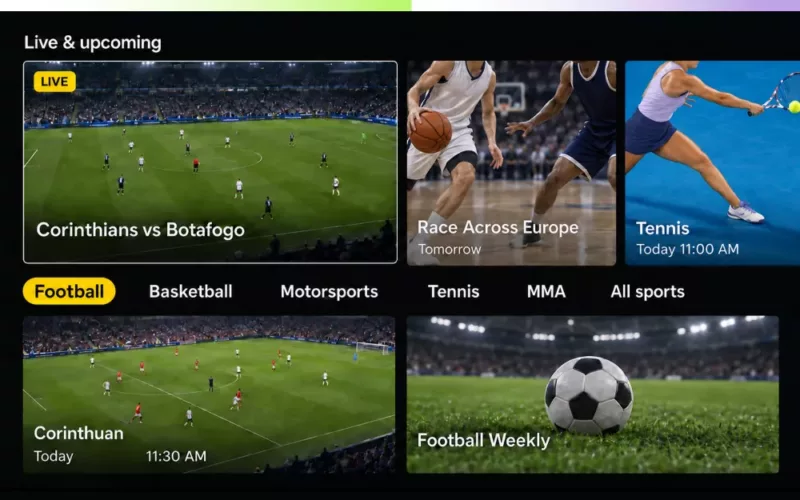
Someone might want something light after a long day, a film the family can enjoy together, or a documentary that challenges their thinking. A sports fan might open a service looking for their favorite team, a particular league, or simply an exciting live match.
These are very different intentions, even when the viewing behavior looks similar.
Consider someone watching a Premier League match. Are they interested in that particular team, the competition itself, or football more broadly? Understanding the difference can dramatically improve what the service presents next.
That’s why Mediagenix Personalization goes beyond historical viewing behavior to capture viewer intent.
Every title has a semantic fingerprint. So does every viewer. Just as a title can be described by its themes, moods and topics, a viewer can be described by the themes, moods and topics they connect with.
Mediagenix builds that viewer fingerprint by combining what audiences explicitly tell us they’re interested in with what we can infer from their viewing behavior and the semantic characteristics of the content they engage with. Broader audience trends add another layer of intelligence, helping services continuously adapt the experience as interests evolve.
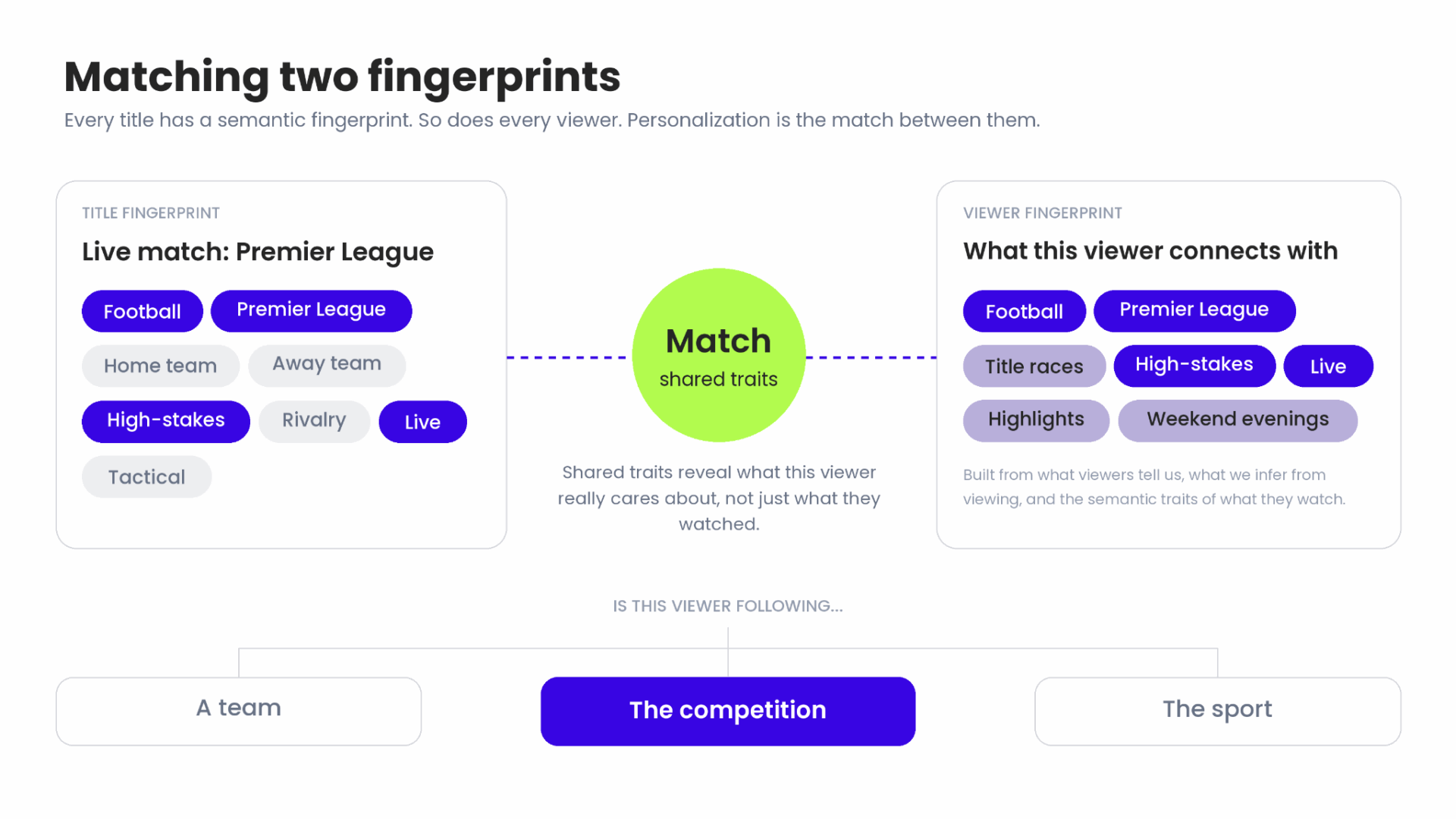
Personalization then becomes a match between two fingerprints: the content and the viewer. That’s what reveals whether someone watching a Premier League match is following a team, a competition, or the sport itself.
From Recommendations to Experiences
With content and viewer intelligence connected, Mediagenix helps streaming services move beyond recommendations to complete personalized experiences.
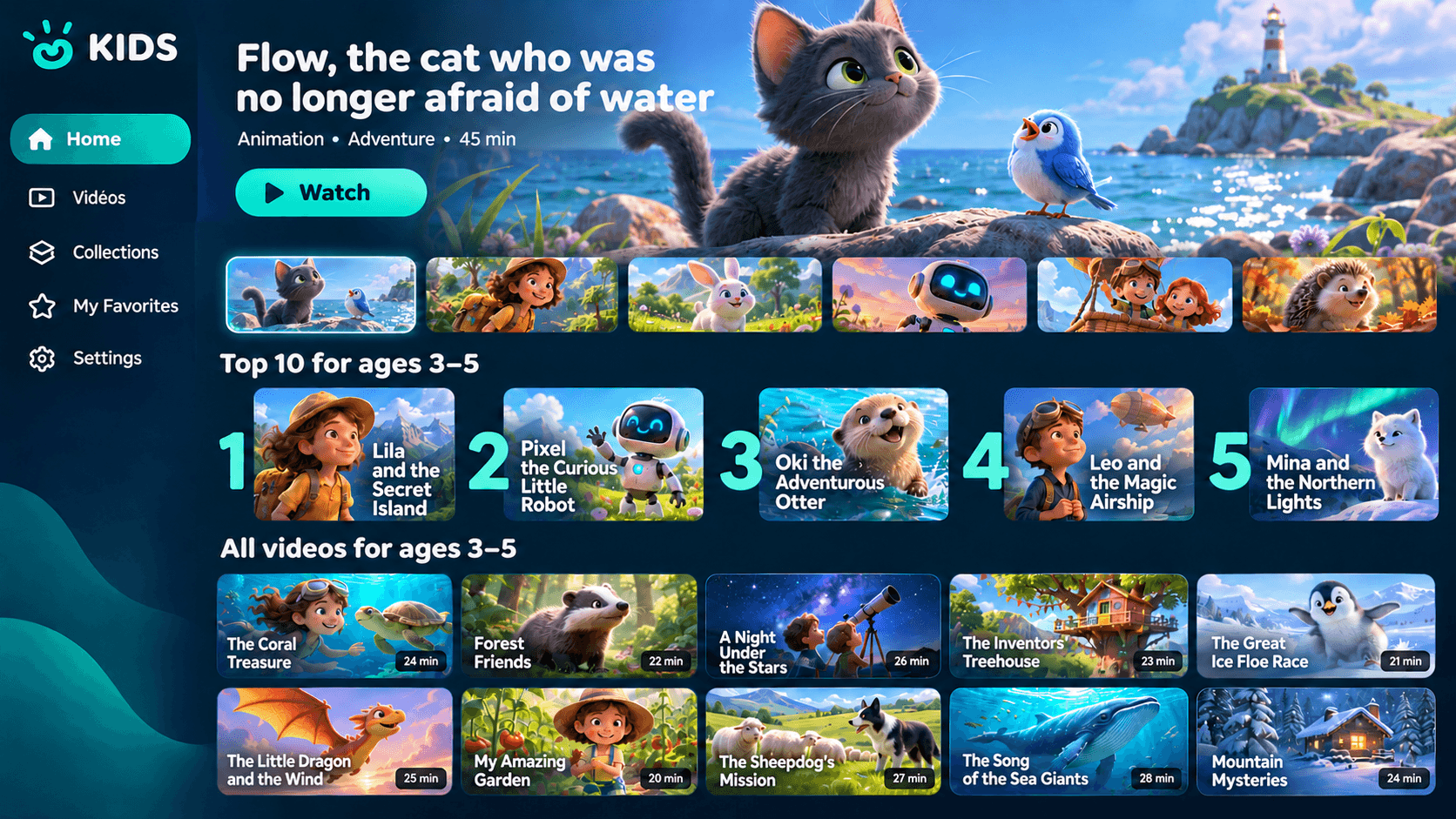
Take children’s programming. Because Mediagenix has invested in richer semantic fingerprints for kids’ content, services can create a dedicated kids’ corner, with content curated around each child’s interests and appropriate viewing experiences.
Or consider a football fan who follows FC Barcelona. Rather than simply recommending another football match, Mediagenix can shape a personalized sports experience that prioritizes the club across relevant matches, highlights, dedicated tabs, content rails, and playlists. As the viewer’s interests evolve, so does the experience.
Mediagenix also gives audiences a voice in shaping their experience, which makes personalization more transparent. Rather than relying entirely on what an algorithm infers, viewers can identify the interests that matter to them and see those preferences reflected in the content and experiences presented.
These aren’t simply better recommendations. They’re more relevant, personalized experiences built around a deeper understanding of both the audience and the content, shaping not only what viewers see but how content is organized and presented to them.
What It Means for the Business
Mediagenix Personalization is already proving its value. In deployments with Globo, DirecTV Latin America and Sky Brasil, it increased viewer engagement with content by 20% to 60%, depending on the system in place before, and improved viewing conversion by more than 35%.
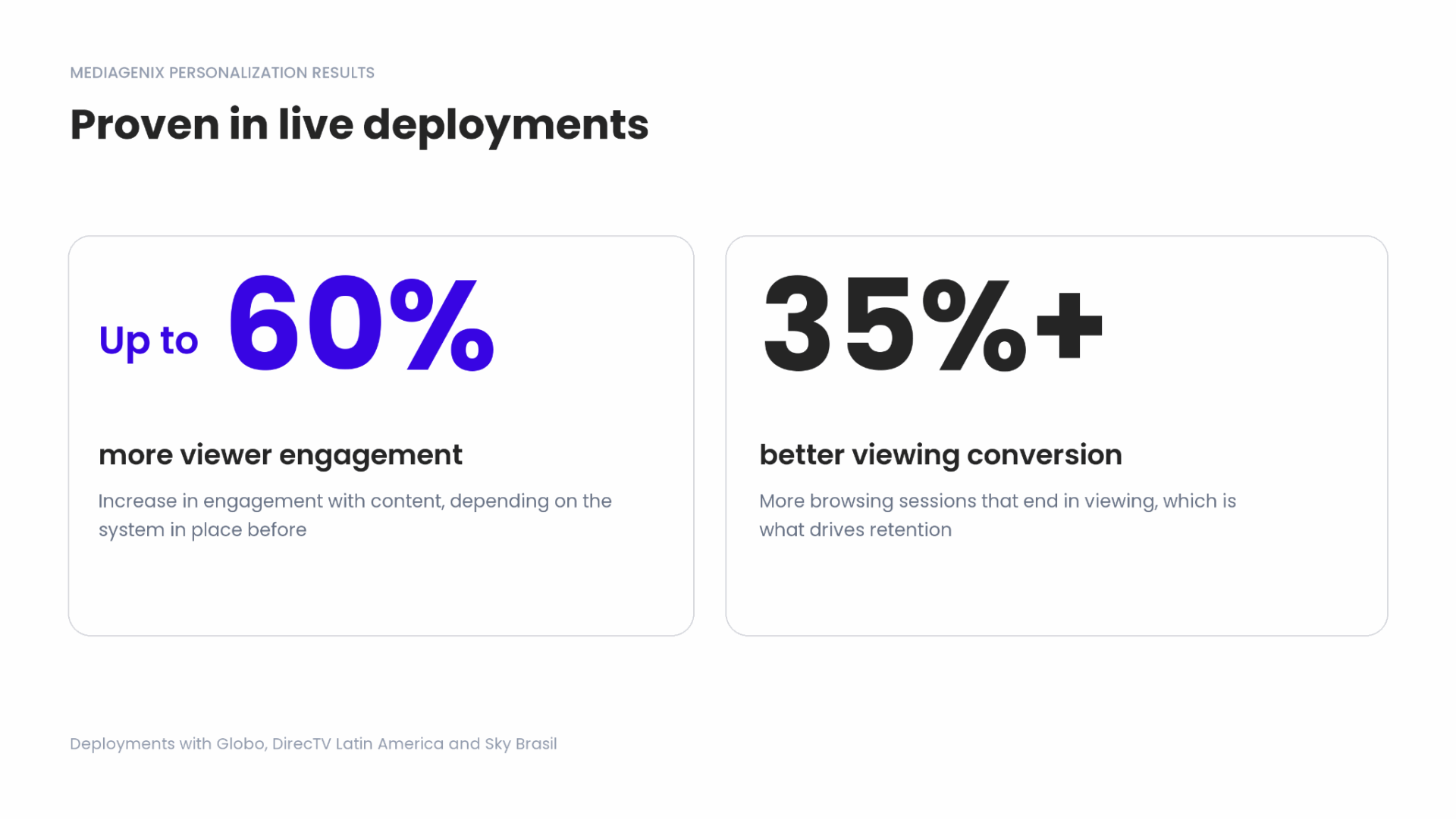
That last number matters most. Browsing alone doesn’t drive retention. Viewing does. A successful search journey keeps viewers watching, and viewers who keep watching stay subscribed.
Curated experiences also give a service something its competitors can’t easily copy. When the kids’ corner feels made for each child and the sports page feels made for each fan, the service stands apart for reasons that go beyond its catalog.
Personalization Starts Upstream
Every personalized viewing experience depends on decisions made long before someone presses play: how content is described and enriched, how rights are managed, and how programming is planned, scheduled, and curated across linear, streaming, FAST, and video-on-demand services.
That’s why Mediagenix approaches personalization differently. Our platform connects intelligence across the entire media lifecycle, bringing together rich content metadata, semantic understanding, rights, scheduling, curation, and audience insights. Personalization draws on the full context, not just viewing history.
By adding an understanding of viewer intent, Mediagenix helps media organizations move beyond recommending more of what someone has already watched to creating experiences that reflect what matters to viewers now.
Connect with us to learn more about creating a more personalized experience for your viewers.
*Gracenote 2026 State of Play Report – HERE.
Insights
Get inspired
08 Oct. 2026
Mediagenix Context-Aware Scheduling Helps Media Companies Anticipate What Will Compete for Audience Attention


09 Sep. 2026
Mediagenix Curation Unlocks Greater Catalog Value Through Personalized Audience Experiences
08 Sep. 2026
Mediagenix Personalization Curates Sports Content Around Individual Viewer Interests.