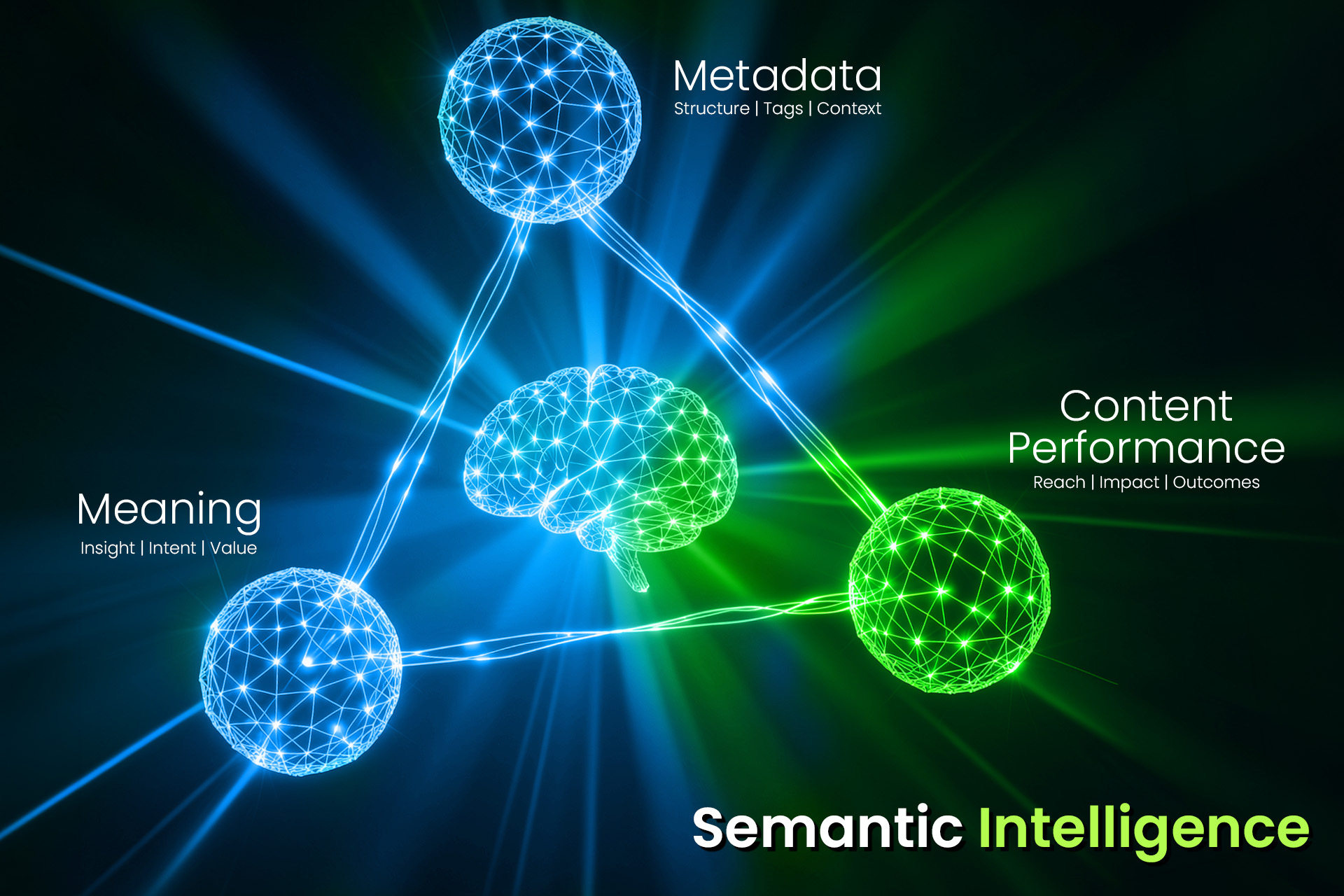
From Metadata to Meaning: Why Semantic Intelligence Is Media’s Next Competitive Advantage
Learn how semantic intelligence transforms metadata into meaning—and meaning into measurable performance across platforms and catalogs.

Media companies are not short on data.
They have ratings curves, completion metrics, churn analysis, audience segments, ad performance dashboards, and extensive content metadata. Entire teams are dedicated to measurement and reporting.
And yet strategic conversations still sound familiar:
“This show performed well — let’s do more like that.”
“That slot underperformed.”
“Drama works better than reality for this audience.”
But what does “like that” actually mean? Why did it perform? Was it the genre, the tone, the cast, the time slot, the competing programming, or the platform?
Data tells you what happened. It rarely tells you what to do next.
What media organizations need is not more reporting. They need a system that turns understanding into continuous operational momentum, a flywheel where every decision strengthens the next.That system begins with Semantic Intelligence.
The Gap Between Data and Action
Consider a broadcaster reviewing primetime performance. A serialized crime drama consistently exceeds expectations. The instinct is immediate: commission more crime dramas.
But crime is a label, not a strategy.
Was the success driven by serialized storytelling? A morally complex protagonist? A regional setting? A strong female lead? Or simply favorable competitive scheduling that evening?
Without deeper context, replication becomes expensive guesswork.
The same dynamic plays out across platforms. A documentary performs strongly on linear broadcast but struggles on catch-up. The conclusion might be that the title “doesn’t travel.”
But perhaps it followed a thematically aligned lead-in on linear. Or that it was positioned differently. Audiences on catch-up may simply consume content differently and need it reframed.
Metadata alone cannot answer these questions. Performance data alone cannot explain them.
Semantic Intelligence connects the two.
From Description to Meaning
Metadata describes an asset: genre, cast, runtime, synopsis.
Semantic Intelligence understands it.
It structures the deeper meaning of content, including its themes, tone, pacing, narrative arcs, audience affinities, contextual relevance, and relationships to other assets. It builds a living ontology that connects content to audience behavior and performance signals.
This is where the shift happens: from classification to understanding.
For example, a streaming service might discover that viewers who engage heavily with political thrillers are not responding to “politics” at all, but to high-stakes institutional drama with investigative arcs and moral tension. That insight shapes commissioning decisions, marketing narratives, and recommendations far more effectively than genre tagging ever could.
Understanding meaning enables strategic replication, not superficial imitation.
And this is where the flywheel begins to turn.
The Semantic Flywheel: Turning Insight Into Momentum
Semantic Intelligence is not a feature layered on top of data. It is the engine of the media flywheel.
The cycle starts with content. Every asset — newly commissioned or decades old — is enriched with structured semantic context. That context connects to audience data and platform-specific behavior.
Performance signals then feed back into the system. Not as isolated metrics, but as contextualized insight. You don’t simply learn that something worked. You understand why it worked, for whom, and under what conditions.
That understanding enables optimization. Schedules are refined. Collections are reshaped. Recommendations become more precise. Content is adapted intelligently for different formats and platforms.
Optimization improves monetization. Library value increases. Commissioning becomes more targeted. Platform strategies become sharper.
And then the cycle repeats: each loop smarter and more efficient than the last.
Content creates context.
Context sharpens performance insight.
Insight drives optimization.
Optimization strengthens monetization.
Monetization informs smarter content decisions.
Without semantic structure, this flywheel stalls. Data accumulates, but insight does not compound.
Unlocking Library Value in a Fragmented Market
For media organizations with vast catalogs, the flywheel effect is especially powerful.
A broadcaster with decades of archived programming may possess enormous latent value. But unlocking that value requires understanding how titles relate to each other, how they align with evolving audience segments, and how they can be repackaged for different platforms.
A historical drama series may not command significant linear ratings today. Yet semantically, it may align with a niche but highly engaged streaming audience. It may lend itself to curated collections, thematic resurfacing, or short-form adaptation for social.
When those relationships are visible, the flywheel accelerates. Hidden value becomes activated. Performance feedback becomes richer. Strategic decisions become more precise.
The library stops being static inventory and becomes a dynamic portfolio.
Platform Context Is Part of Meaning
Today’s media environment is not one platform — it is many. Linear, FAST, AVOD, SVOD, catch-up, social. Each has its own consumption patterns and audience behaviors.
A three-hour epic film may thrive in primetime broadcast but requires thoughtful adaptation for vertical consumption on social platforms. A children’s program may perform differently depending on time of day, device usage, or parental co-viewing patterns.
Simply placing the same asset everywhere is not a strategy. It is a duplication.
Semantic Intelligence incorporates platform context into meaning. It informs whether a title should be reframed, shortened, repositioned, or sequenced differently. It clarifies rights considerations and operational constraints.
When meaning travels intelligently across platforms, the flywheel gains speed instead of friction.
Personalization That Understands, Not Just Recommends
Personalization engines depend on more than engagement history.
When a platform curates rails or builds recommendations, it is making assumptions about audience intent. A viewer who watches crime dramas may not want all crime. They may respond specifically to serialized narratives with strong psychological tension.
Without semantic nuance, recommendations overgeneralize.
With Semantic Intelligence, personalization becomes explainable and precise. It aligns content with audience motivation rather than simply past clicks. It creates collections that feel coherent rather than algorithmic.
That precision feeds back into performance, sharpening the flywheel once again.
The Foundation for Intelligent Automation
As the industry moves toward conversational interfaces and agent-driven workflows, structure becomes even more critical.
Automation without semantic context is fragile. Agents can execute tasks, but without structured meaning, they lack guardrails. Decisions become opaque. Governance becomes reactive instead of embedded.
Semantic Intelligence provides the contextual backbone that makes automation trustworthy. It ensures that intelligent workflows operate within clearly defined content structures, audience relationships, and operational rules.
It allows organizations to embed governance directly into the flywheel rather than bolting it on afterward.
From Gut Feel to Explainable Advantage
Creative instinct will always have a role in media. But the competitive edge now lies in augmenting instinct with explainable intelligence.
When a scheduling decision can be traced to semantic alignment and audience behavior, confidence increases. When commissioning choices are grounded in structured insight about thematic gaps or performance drivers, risk decreases.
Semantic Intelligence does not replace human judgment. It strengthens it and ensures that each decision contributes to a self-reinforcing system rather than a one-off experiment.
Becoming a Real-Time Media Enterprise
A Real-Time Media Enterprise does more than report on performance. It learns continuously. It adapts dynamically. It embeds governance into its operations. It turns insight into action without delay.
That transformation depends on a flywheel that compounds intelligence rather than merely collecting data.
Dashboards alone do not power that flywheel.
Semantic Intelligence does.
It is what transforms metadata into meaning, performance into strategy, and isolated decisions into continuous momentum.
The next generation of media leaders will not win because they have more data. They will win because they understand their data — semantically, contextually, and operationally — and use that understanding to keep the flywheel turning.
Without meaning, data spins.
With Semantic Intelligence, the business accelerates.
Insights
Get inspired
08 Oct. 2026
Mediagenix Context-Aware Scheduling Helps Media Companies Anticipate What Will Compete for Audience Attention


09 Sep. 2026
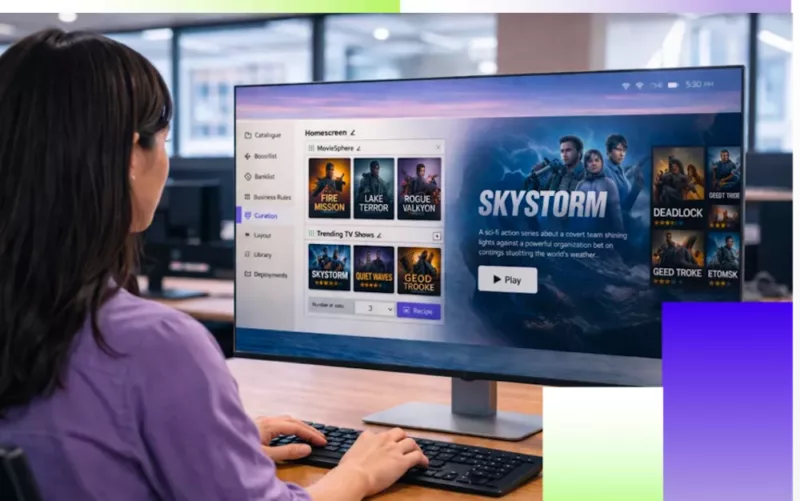
Mediagenix Curation Unlocks Greater Catalog Value Through Personalized Audience Experiences
08 Sep. 2026
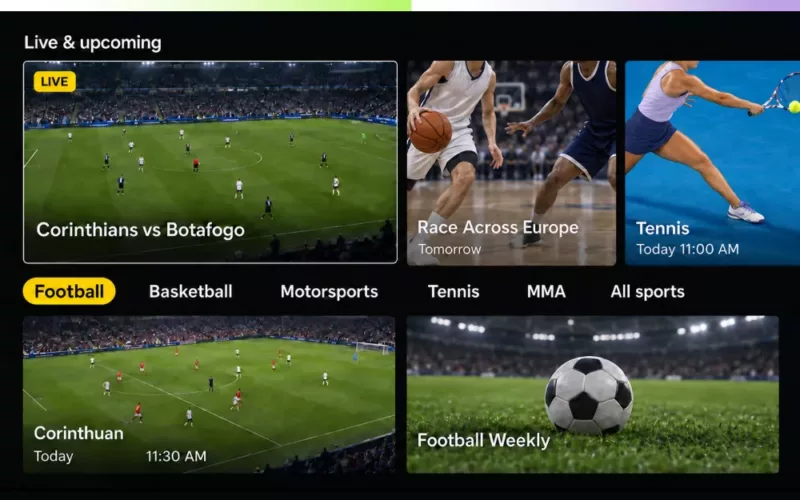
Mediagenix Personalization Curates Sports Content Around Individual Viewer Interests.